
Blog
Decoding the Clue: “Bumped Things NYT Crossword” Puzzle


Introduction
Crossword puzzles are one of the most beloved pastimes for countless enthusiasts worldwide, and the New York Times (NYT) crossword is a gold standard in the world of word puzzles. One of the more recent buzzworthy phrases in this crossword-solving community is “bumped things,” a clue that has left many solvers scratching their heads. Whether you’re a seasoned crossword solver or a newcomer trying out the NYT crossword for the first time, understanding clues like “bumped things” can be both challenging and rewarding.In this article, we’ll dive deep into the world of crossword puzzles, explore what “bumped things” means in the context of the NYT crossword, and provide tips for solving tricky clues like this one. By the end of this guide, you’ll feel more confident tackling cryptic or ambiguous crossword hints and uncovering the joy of puzzle-solving.
What Does “Bumped Things” Mean in the NYT Crossword?
To understand the clue “bumped things,” it’s vital to recognize the unique nature of crossword puzzles. Crossword clues often rely on wordplay, double meanings, or cultural references to challenge solvers. The phrase “bumped things” is no exception—it’s a clue that requires both linguistic understanding and lateral thinking.In many NYT crossword puzzles, “bumped things” is likely a reference to physical objects that collide, touch, or interact in a way that involves bumping. However, the solution often depends on the number of letters in the answer and the intersecting words in the puzzle. For example:
- Possible answers:
- “HIPS” (as in “bumping hips”)
- “BUMPS” (literal bumps on a surface or figurative encounters)
- “CARS” (as in bumper cars at an amusement park)
The genius of crossword clues like “bumped things” lies in their vagueness, which forces solvers to consider multiple interpretations. It could refer to physical actions, metaphorical uses, or even slang terms. The NYT crossword often incorporates clever misdirection, making solvers think outside the box.
Why Are NYT Crosswords So Popular?
The NYT crossword has a long-standing reputation for being one of the most challenging yet rewarding word puzzles in the world. First published in 1942, it has since become a cultural phenomenon, with millions of solvers attempting to decipher its clues daily. Here are some reasons why the NYT crossword remains popular:
- Daily Challenge: The NYT crossword offers a new puzzle every day, with increasing difficulty as the week progresses. Monday puzzles are easier, while Saturday puzzles are notoriously difficult. Sunday puzzles are larger and often include a theme.
- Clever Wordplay: The puzzles are known for their puns, double meanings, and wordplay, which keep solvers engaged and entertained.
- Cultural References: The puzzles often include references to pop culture, history, and current events, making them relevant and fun for a wide audience.
- Mental Exercise: Solving crosswords is a great way to exercise your brain, improve your vocabulary, and enhance problem-solving skills.
The phrase “bumped things” is an excellent example of why NYT crosswords are so captivating—it’s a simple clue that can have multiple layers of meaning and interpretation.
Tips for Solving Tricky NYT Crossword Clues Like “Bumped Things”
If you’ve ever felt stuck on a clue like “bumped things,” don’t worry—you’re not alone! Even experienced solvers encounter tough spots. Here are some strategies to tackle tricky crossword clues:
- Consider the Context:
- Look at the intersecting letters from other answers. These can provide crucial hints about the correct word.
- Pay attention to the clue’s phrasing. Is it literal, figurative, or leaning on wordplay?
- Think About Synonyms:
- “Bumped things” could relate to actions like “hit,” “collided,” or “nudged.”
- Expand your thinking to include related ideas, such as “impact” or “encounter.”
- Break Down the Clue:
- If the clue feels ambiguous, try to analyze each word individually. For example:
- “Bumped” could mean “collided” or “raised.”
- “Things” suggests plural objects, so the answer is likely a plural noun.
- If the clue feels ambiguous, try to analyze each word individually. For example:
- Use Online Tools Sparingly:
- If you’re completely stuck, crossword-solving tools or dictionaries can help. However, try to solve as much as you can on your own first to maximize the learning experience.
- Practice Regularly:
- The more puzzles you solve, the better you’ll become at recognizing patterns, understanding wordplay, and interpreting tricky clues.
Common Crossword Clue Types You Should Know
To become a skilled crossword solver, it’s important to familiarize yourself with common clue types. “Bumped things” is an example of a straightforward clue, but there are many other clue types you might encounter in the NYT crossword:
- Anagrams:
- Clues that require rearranging letters to form a word. For example, “Mixed up item” could lead to “TIME.”
- Homophones:
- Clues that reference words that sound alike. For example, “Heard at the beach” could refer to “SEE” (sounds like “sea”).
- Cryptic Clues:
- These clues often involve puns or wordplay. For instance, “Flower holder?” could mean “VASE” or “RIVER” (a body of water that “flows”).
- Abbreviations:
- Sometimes, clues involve abbreviations. For example, “Road measure: Abbr.” might lead to “MPH” (miles per hour).
- Pop Culture References:
- The NYT crossword frequently includes nods to movies, music, and celebrities. For example, “Singer Beyoncé’s mononym” would be “BEY.”
Understanding these clue types will help you solve even the trickiest puzzles with confidence.
Why “Bumped Things” Resonates with Crossword Solvers
The clue “bumped things” is a great example of why crossword puzzles are so engaging. Despite its simplicity, it challenges solvers to think critically and creatively. It’s also a reminder of the joy and satisfaction that comes from solving a difficult clue—an experience that keeps people coming back to the NYT crossword day after day.Additionally, clues like “bumped things” highlight the broader appeal of crossword puzzles. Whether you’re a linguist, a trivia enthusiast, or just someone looking for a fun mental workout, crosswords offer something for everyone. The sense of accomplishment that comes with solving a puzzle is unmatched, and every clue solved feels like a small victory.
Conclusion
The NYT crossword is more than just a puzzle—it’s a cultural institution that has captivated millions of solvers for decades. Clues like “bumped things” exemplify the cleverness and creativity that make these puzzles so enjoyable. By understanding the nuances of crossword clues, practicing regularly, and honing your problem-solving skills, you can become a master solver and fully appreciate the artistry of the NYT crossword.So, the next time you encounter a tricky clue like “bumped things,” remember to take a deep breath, think outside the box, and enjoy the process. Happy puzzling!


Dachshunds are undeniably one of the most unique and recognizable dog breeds. With their long bodies, short legs, and expressive faces, they’ve won the hearts of many pet lovers. But despite their adorable appearance, these little dogs come with quirks and challenges that not everyone is prepared to handle.
Are they the worst breed? Not necessarily—but they do have traits that can make them a poor fit for certain families.
In this article, we explore why dachshunds might not be right for everyone, while also shedding light on the traits that make them so lovable. Read on to discover why these quirky pups are both endearing and, at times, exasperating.
The Adorable Side of Dachshunds
Before diving into the downsides, let’s acknowledge the many reasons why dachshunds remain a popular breed:
1. Loyal to the Core
Dachshunds form incredibly strong bonds with their owners. They’re affectionate, often curling up in your lap or following you from room to room. Their devotion makes them ideal for people seeking a loyal, loving companion.
2. Smart and Playful
Don’t let their size fool you—dachshunds are intelligent and curious. They love puzzle toys, games, and interactive play. Their cleverness makes them quick learners (when they feel like cooperating), providing hours of mental stimulation and fun.
3. Great for Small Spaces
Their small stature makes dachshunds perfect for apartments or smaller homes. While they do need regular exercise and play, they’re generally content lounging indoors with their humans.
4. Sometimes Good with Kids
With proper socialization and respectful handling, dachshunds can be great companions for children. They enjoy playtime and can develop strong bonds with young family members—so long as the kids know how to treat them gently.
5. Low Shedding
If you dread vacuuming up dog hair, you’re in luck. Dachshunds are low-shedding, and grooming is relatively simple—especially for short-haired varieties. This makes them appealing to busy owners who still want a tidy home.
The Challenging Side: Why Dachshunds Might Be the Worst Breed for Some
Despite their charm, dachshunds aren’t the right fit for everyone. Here’s why some owners find them difficult to manage:
1. Serious Health Concerns
That iconic long body? It comes with serious risks. Dachshunds are prone to Intervertebral Disc Disease (IVDD), which affects the spine and can lead to pain, paralysis, or the need for costly surgery. They’re also susceptible to patellar luxation, eye problems, and obesity.
Bottom line: If you’re not prepared for potential vet bills and extra care, think twice.
2. Bark, Bark, Bark
Dachshunds are vocal by nature. Originally bred to alert hunters, they bark at everything—strangers, other dogs, squirrels, delivery drivers, even passing clouds. This constant noise can test your patience, especially in shared living spaces.
3. Stubborn as They Come
Yes, dachshunds are intelligent—but they’re also incredibly stubborn. Training can be a battle of wills. While they can learn commands, they’ll often ignore them if they don’t see the point. This strong-willed attitude requires a patient, consistent approach.
4. High Prey Drive
Dachshunds were bred to hunt, and that instinct hasn’t disappeared. They love to chase, dig, and bark at anything that moves. Small pets like cats, hamsters, or birds may not be safe around them without careful introductions and supervision.
5. Not Always Kid-Friendly
While they can be great with kids, dachshunds don’t tolerate rough handling. If children pull on their ears or tails, they may react by growling or snapping. They’re best suited to families with older, respectful children or adults.
6. Hate the Rain
Most dachshunds loathe getting wet. Their low bellies make even shallow puddles uncomfortable, and rainy weather often turns walks into a struggle. Many owners resort to raincoats—but even then, expect some resistance.
7. Clingy and Moody
Dachshunds are needy. They crave attention and don’t like being left alone for long periods. When bored or anxious, they can become destructive—chewing furniture, whining, or acting out. For owners who work long hours, this can be a deal-breaker.
Is a Dachshund Right for You?
Dachshunds aren’t inherently “bad” dogs—but they are a breed that demands commitment, understanding, and patience. If you’re ready to embrace their quirks, invest in training, and provide lots of love and attention, a dachshund can be a fiercely loyal and entertaining companion.
But if you’re looking for an easy-going, low-maintenance dog, they may not be the best fit.
Final Thoughts
In the end, no dog breed is universally the “worst.” Dachshunds are beloved by millions for a reason—but their strong personalities and health challenges can catch new owners off guard.
If you’re thinking about bringing one home, do your homework, talk to current dachshund owners, and make sure their needs align with your lifestyle.
Introduction
“Antarvwsna” is a term that has been gaining attention in recent years. While it may seem cryptic or unfamiliar at first, its roots and implications are significant across various cultural, psychological, and philosophical discussions. Whether it’s a concept, a movement, or a term used to describe a specific idea, Antarvwsna holds a deeper meaning that resonates with many facets of life.
In this article, we’ll delve deep into the various aspects of Antarvwsna, its origins, interpretations, and how it impacts people today. By the end of this guide, you will have a clear understanding of what Antarvwsna represents and why it is relevant in our modern world.
What is Antarvwsna?
The word Antarvwsna is derived from two parts: “Antar,” which often means “inner” or “internal,” and “Vwsna,” which could refer to desire, longing, or instinct. When put together, Antarvwsna can be interpreted as “inner desire” or “internal longing.”
This term, often found in philosophical or spiritual contexts, signifies a deeper yearning or internal struggle that individuals experience. It may relate to one’s goals, emotional needs, or self-discovery. Antarvwsna, therefore, becomes a universal concept, as everyone experiences internal desires or conflicts at some point in life.
Origins and Cultural Significance
Historical Context
Antarvwsna has roots in ancient philosophy, particularly in Eastern traditions where introspection and understanding one’s inner self are emphasized. It has been referenced in texts that explore human consciousness, desires, and the path to self-realization.
In Indian philosophy, for instance, the idea of inner desires and their impact on human behavior has been widely discussed. Antarvwsna could be linked to concepts like Kama (desire) and Moksha (liberation), where balancing inner desires is seen as a step toward achieving spiritual enlightenment.
Modern Interpretations
Today, Antarvwsna is not just confined to philosophical discussions. It has found relevance in:
- Psychology: Addressing inner desires and struggles in relation to mental well-being.
- Literature and Arts: Used as a theme to explore human emotions and conflicts.
- Self-Help and Motivation: Encouraging people to identify and fulfill their inner desires to lead a more meaningful life.
Why Antarvwsna Matters
Antarvwsna is more than just a concept; it is a reflection of the human condition. Understanding and addressing one’s inner desires is crucial for personal growth and happiness. Here are some reasons why Antarvwsna is important:
1. Self-Awareness
Recognizing and understanding your inner desires can help you become more self-aware, which is the first step toward personal development.
2. Emotional Balance
Unresolved or ignored desires can lead to emotional turmoil. Addressing Antarvwsna helps achieve emotional balance and mental well-being.
3. Goal Setting and Fulfillment
By identifying your inner desires, you can set meaningful goals and work toward achieving them, leading to a more fulfilling life.
4. Improved Relationships
Understanding your own desires can also help you empathize with others, improving communication and relationships.
Exploring Antarvwsna Through Different Perspectives
Psychological Perspective
In psychology, Antarvwsna can be linked to the concept of self-actualization, as defined by Abraham Maslow in his hierarchy of needs. Self-actualization is the process of realizing one’s full potential and fulfilling inner desires.
Many therapists encourage individuals to explore their Antarvwsna to address unresolved emotions or unmet needs. Techniques like journaling, meditation, and therapy sessions are often used to delve into one’s inner world.
Spiritual Perspective
From a spiritual standpoint, Antarvwsna represents the human soul’s longing for connection, purpose, and enlightenment. In many traditions, it is believed that fulfilling your inner desires aligns you with your higher self or divine purpose.
Practices such as yoga, mindfulness, and prayer are often recommended to help individuals connect with their Antarvwsna on a deeper level.
Societal Perspective
In a fast-paced world where external validation often takes precedence, Antarvwsna reminds us to look inward. It’s a call to prioritize personal satisfaction and inner peace over societal expectations.
How to Identify and Fulfill Your Antarvwsna
Understanding and fulfilling your Antarvwsna requires introspection and action. Here are some actionable steps to help you on this journey:
1. Practice Self-Reflection
- Set aside time for introspection to identify what truly matters to you.
- Ask yourself questions like, “What do I yearn for?” or “What brings me joy?”
2. Write It Down
- Keep a journal to document your thoughts, feelings, and goals.
- Writing helps clarify your desires and track your progress.
3. Seek Guidance
- Talk to a mentor, coach, or therapist who can provide insights and guidance.
- Sometimes, an external perspective can help you see things more clearly.
4. Take Small Steps
- Break down your desires into achievable goals.
- Celebrate small victories to stay motivated.
5. Embrace Mindfulness Practices
- Engage in practices like meditation or yoga to connect with your inner self.
- These practices help reduce distractions and focus on your true desires.
Table: Key Aspects of Antarvwsna
🧠 Exploration of Inner Desire
| Aspect | Details |
|---|---|
| Definition | Inner desire or internal longing |
| Origins | Rooted in ancient philosophy, particularly in Eastern traditions |
| Modern Relevance | Found in psychology, self-help, and spiritual practices |
| Importance | Promotes self-awareness, emotional balance, and personal growth |
| Techniques to Explore | Journaling, meditation, therapy, and mindfulness |
| Challenges | Overcoming societal expectations and external distractions |
| Benefits | Improved mental well-being, goal fulfillment, and meaningful relationships |
Common Challenges in Addressing Antarvwsna
While understanding your Antarvwsna is essential, it’s not always easy. Here are some challenges you might face:
1. Fear of Judgment
Many people suppress their inner desires due to fear of societal judgment or rejection.
2. Uncertainty
It’s common to feel unsure about what you truly want, especially when external influences cloud your judgment.
3. Lack of Support
Without a supportive environment, it can be challenging to pursue your goals and fulfill your desires.
4. Overthinking
Constantly analyzing your desires can lead to overthinking and inaction.
Overcoming Challenges
- Embrace Vulnerability: Accept that it’s okay to have desires and aspirations that may not align with societal norms.
- Seek Like-Minded Communities: Surround yourself with people who support and encourage your journey.
- Focus on Progress, Not Perfection: Remember that small steps toward your goals are still progress.
- Practice Self-Compassion: Be kind to yourself and acknowledge that self-discovery is a gradual process.
The Impact of Antarvwsna
Antarvwsna not only transforms individuals but also has a ripple effect on society. When people fulfill their inner desires, they:
- Become more empathetic and understanding toward others.
- Contribute positively to their communities.
- Inspire others to embark on their own journeys of self-discovery.
Conclusion
Antarvwsna, or inner desire, is a powerful concept that underscores the importance of introspection, self-awareness, and personal growth. By understanding and addressing your Antarvwsna, you can lead a more fulfilling life and make a meaningful difference in the world around you.
In today’s fast-paced world, taking the time to connect with your inner self is more important than ever. Whether through mindfulness, goal-setting, or seeking guidance, embracing your Antarvwsna is a journey worth embarking on.
As you explore this concept in your own life, remember that it’s not about perfection but about progress. Antarvwsna is a reminder that our inner desires are not obstacles but stepping stones to a more meaningful and enriched life.
So, take that first step—dive deep into your Antarvwsna and discover the incredible potential within you.
Have you ever wondered how much bigger one number is compared to another, or why decimals are so important? Numbers like 11.97 and 7.23 may seem simple, but they hold many hidden insights. Whether in budgeting, measuring, or analyzing data, understanding these numbers can make a big difference.
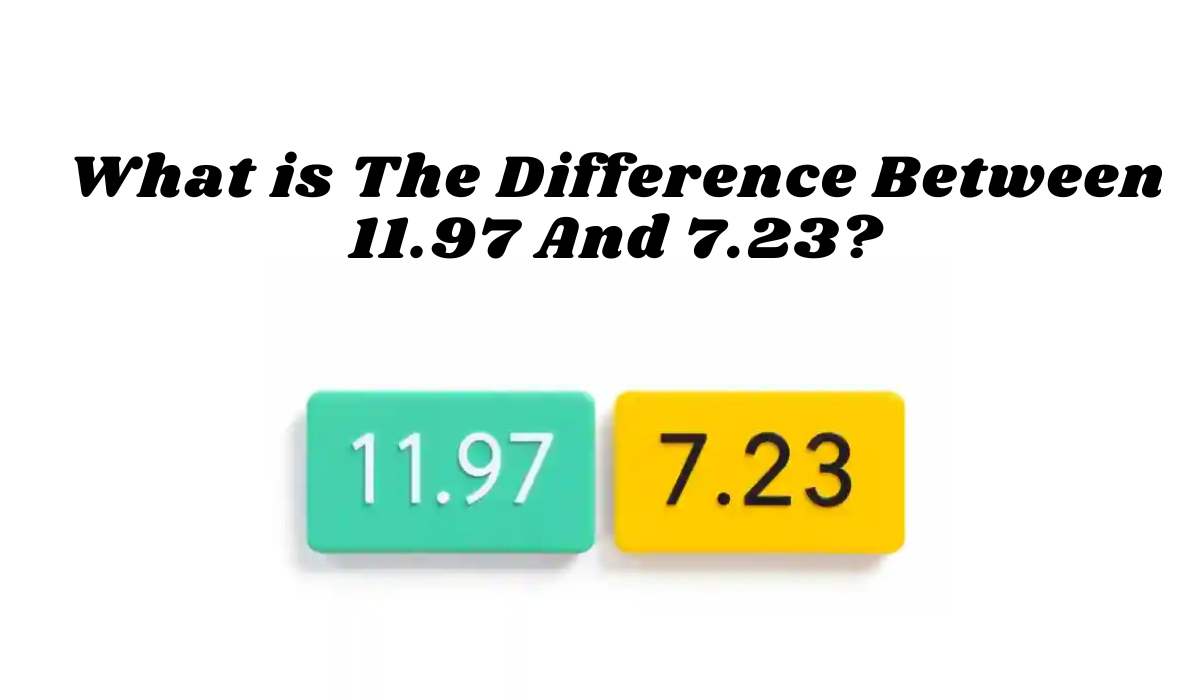
This blog dives into what is the difference between 11.97 and 7.23 these two numbers, breaks down their components, and highlights their real-life applications. You’ll also learn how decimal places impact decisions in fields like finance, science, and everyday cooking.
By the end, you won’t just know that 11.97 – 7.23 = 4.74—you’ll understand why that difference matters.
Why It’s Important to Understand the Difference Between Two Numbers
At first glance, calculating the difference between 11.97 and 7.23 might seem straightforward. Subtract one from the other, and voilà—you have 4.74. But dig deeper, and you’ll discover that this exercise is a gateway to understanding the significance of decimal places, precision, and context.
For example:
- Imagine you’ve priced two products. One is $11.97, and the other is $7.23. The gap can help you identify profit margins or highlight pricing strategies.
- Or you’re measuring quantities in a recipe—accurate subtraction ensures flawless meals.
- Even a small difference like this can be massive when managing finances, calculating payroll, or conducting scientific experiments.
Understanding the “why” behind such differences gives you an edge in decision-making, whether you’re an entrepreneur, a student, or a hobbyist baker.
What Is 11.97?
11.97 represents a decimal number typically seen across several contexts, from monetary amounts to measurements. But what does it really signify?
- Structure of 11.97:
- Tens place = 1 (10 units)Ones place = 1 (1 unit)Tenths place = 9 (0.9 or 90% of a whole)Hundredths place = 7 (0.07 or 7% of a whole)
- Finance: You might pay $11.97 for a lunch combo or subscription fee.Measurements: It could represent 11.97 ounces of flour or a temperature reading for an experiment.Mathematics: It’s a precise decimal that can affect everything from rounding to ratios.
- Breaking Down 7.23:Ones place = 7 (whole number)Tenths place = 2 (0.2 or 20% of a whole)Hundredths place = 3 (0.03 or 3% of a whole)
- Buying an item that costs $7.23Measuring distances or scientific samplesUsing it in equations, such as calculating averages or proportions
- Magnitude:11.97 is 4.74 larger than 7.23.Despite being close, the difference can be significant depending on context.
- Decimal Precision:
- Both numbers have values past the decimal point, which makes them suitable for precise applications like pricing or scientific measurements.
- Context Matters:
- The importance of this difference depends on whether you’re analyzing finances, recipes, or mathematics.
- Finance: A gap of $4.74 could mean pricing inefficiency or profit loss.Science: Measuring equipment with a deviation this large can result in flawed experiments.Day-to-Day Life: Grocery shopping or baking requires precision—for example, subtracting the wrong amount could alter your recipe.
- Compare and subtract amounts for groceries, bills, or project budgets.Example: You’re tracking total expenses of $11.97 in one category and $7.23 in another—knowing the difference helps fine-tune your spending.
- Measurements must be precise. If a recipe asks for 11.97 ounces of flour but you mistakenly add just 7.23 ounces, the result could be disastrous!
- Exact decimal placement is crucial in calculating distances, dosages, or volumes for experiments.
- Adjusting two price points (like $11.97 and $7.23) can impact supply chain decisions and profit margins.
- Suppose you’re calculating distances with miles/kilometers. The variance between 11.97 miles and 7.23 miles exactly is useful in optimizing routes.
- Precision in Finance:A loss of $0.05 might seem insignificant, but over hundreds of transactions, it adds up.Accuracy in Science:Decimal errors in measurements often cause failed experiments.Better Comparisons:Imagine comparing weights of 11.97 kg and 7.23 kg—without decimals, key differences could be lost.
How Understanding Decimals Enhances Everyday Decision-Making
While it may seem like a basic calculation, finding the difference between 11.97 and 7.23 reflects how numbers—especially those with decimals—shape our world. Whether you’re teaching math, managing finances, or measuring ingredients, grasping this concept equips you to tackle tasks with confidence.
FAQs About What is The Difference Between 11.97 And 7.23
Q1. Why should I care about the difference between two decimal numbers?
Even small differences in decimal numbers can have big impacts in areas like finance, science, or day-to-day tasks. Understanding decimal places ensures better accuracy.
Q2. How can I calculate decimal differences accurately?
Align the decimal points properly, start subtracting from the rightmost digit, and borrow when necessary.
Q3. Why do precise decimal places matter in budgeting?
Small decimal inaccuracies can snowball into larger losses, impacting budgets and profit margins.
Q4. Are decimals only important in science and finance?
Not at all. Decimals also matter in cooking, retail, education, and wherever precision is key.

Elevate Your Look: 11 Must-Try Short Fade Haircuts for 2025

WWE Reportedly Changed Matches After Smackdown in Orlando.

How to Maintain Healthy Hair in 2025: Trends, Tips, and Techniques

Moszacos Lipstick Moisturizing: Hydrate and Beautify Your Lips

Uncovering the Life of Malia Manocherian

Discovering Luxury Fashion Brands: A Comprehensive Guide

How to Get the Perfect Light Brown Nails Color Backstageviral.com

Nyogymbace: The Practice That Connects Mind and Body

Natasha Pirkochova: Revolutionizing Style with a Bold Vision
Why Dachshunds Are the Worst Breed – And Why You Might Love Them Anyway!
-
 Fashion5 months ago
Where Fig Leaves First Came into Fashion
-
 Fashion3 months ago
Dress to Impress Creator Gigi and the Rise of Roblox Fashion
-
 Entertainment5 months ago
Why Is WBN Only Black and White? Exploring Marvel’s Unique Creative Choice
-
 Finance5 months ago
Understanding Luck Hunter Predition Hoy Mananan in the Crypto Market
-
 Blog6 months ago
Brock Purdy House And Humble Lifestyle
-
 Entertainment6 months ago
Discover Blogspot Night Express Black Disco
-
 Art & Culture6 months ago
Katz Martian, Marvin & Greece Katz: Creative Icons
-
 Blog5 months ago
Kennedy Funding Ripoff Report – Separating Facts from Misconceptions